Destinations · Campania
Herculaneum the city preserved by mud
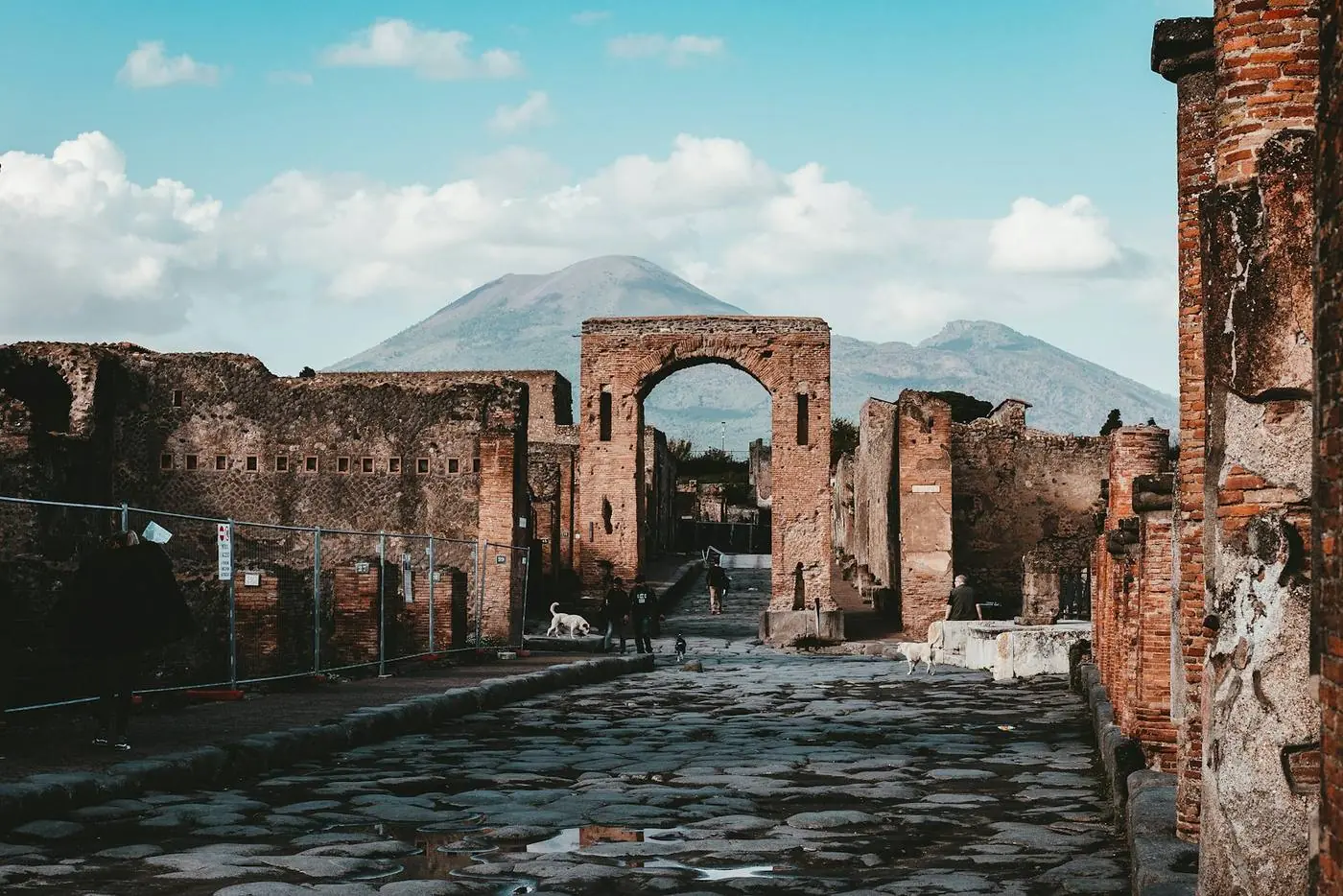
Smaller than Pompeii and more intact: here Vesuvius preserved even the wooden ceilings, the furniture and the food on the tables.
A city by the sea under twenty metres
Founded by Hercules according to legend, Herculaneum was a small, elegant town overlooking the bay, chosen by wealthy Romans for their homes. In AD 79 it was not buried by pumice like Pompeii, but by flows of scorching volcanic material that covered it to a depth of around twenty metres.
That very material, once solidified, preserved what has vanished elsewhere: beams, doors, beds, fabrics, even carbonised bread. In the 1980s, under the vaults of the ancient beach, hundreds of skeletons were found of people waiting to be rescued from the sea.
The papyri being read again
The city re-emerged in 1709 while a well was being dug; from 1738 the Bourbons explored it through underground tunnels. That is how the Villa of the Papyri was found, with a library of more than a thousand carbonised scrolls: today scholars are reading them with tomography and artificial intelligence.
Open-air excavations began in 1927 under Amedeo Maiuri. Since 1997 Herculaneum has been a UNESCO World Heritage Site together with Pompeii and Oplontis.
Not to be missed in Herculaneum
House of Neptune and Amphitrite
The glass-paste mosaic is still brilliant.
House of the Bicentenary
One of the richest homes, with traces of wooden furniture.
Suburban Baths
Among the best-preserved bath buildings of antiquity.
The boat sheds of the ancient beach
Where the skeletons of the fugitives were found.
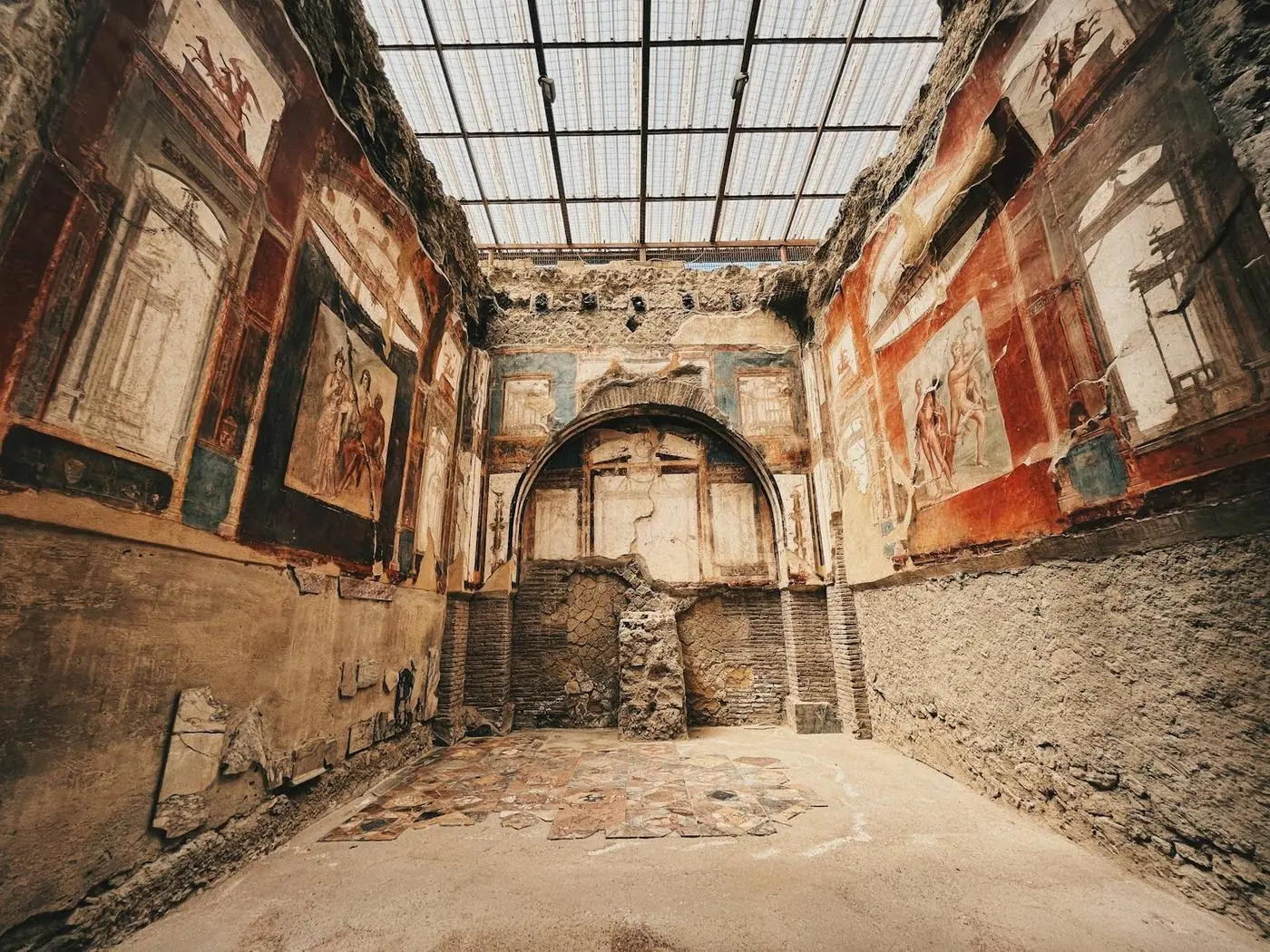
College of the Augustales
A public building with frescoes dedicated to Hercules.
MAV – Virtual Museum
The city rebuilt digitally, before or after your visit.
Before you go
It’s the closest archaeological site to Naples.
The site is compact and easy to visit, even with children.
Less crowded than Pompeii even in high season.
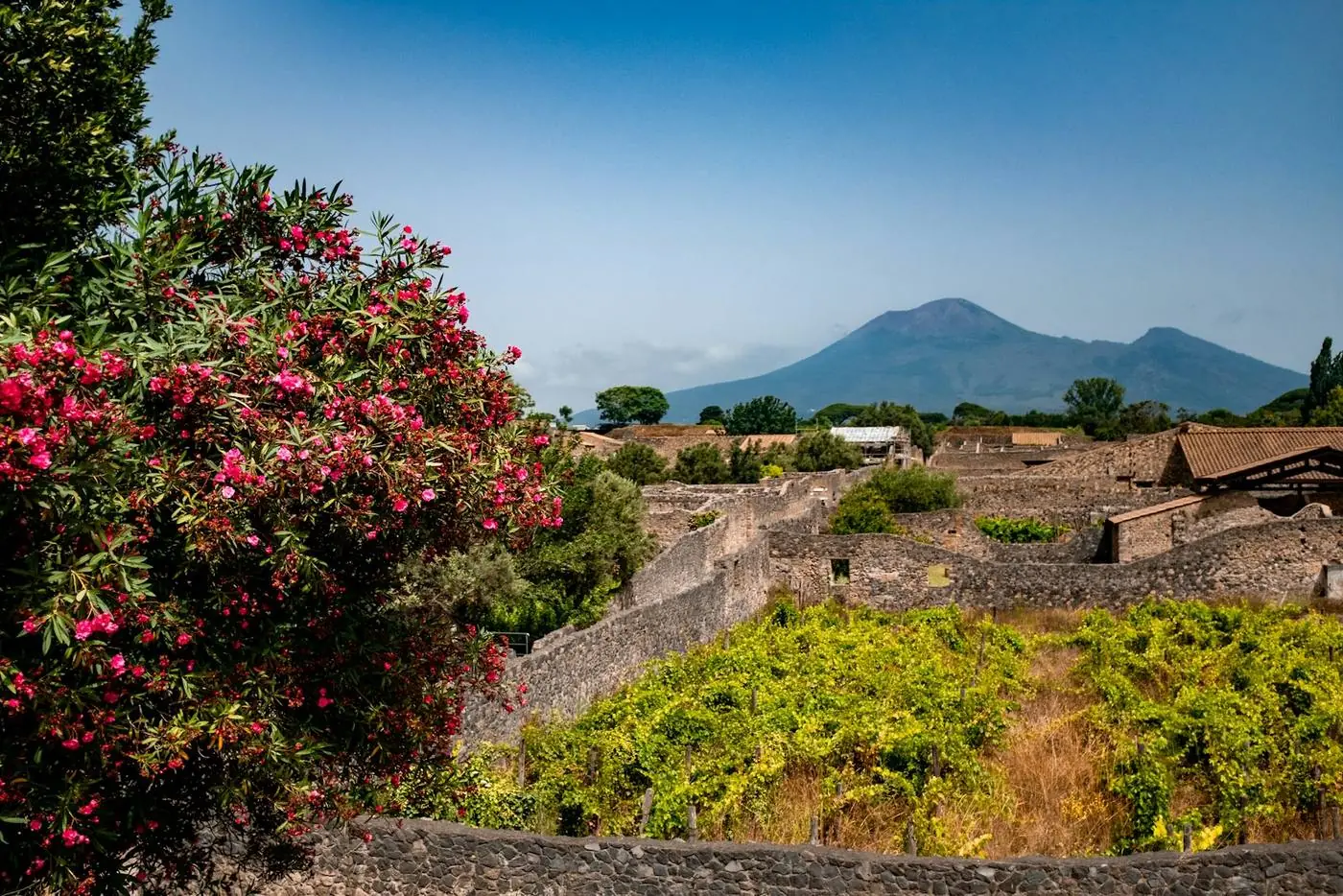
The road up Vesuvius starts right above here.
If you only have one morning, Herculaneum is the right choice: in two hours you see an intact Roman city, and in the afternoon you can go up Vesuvius.
Approximate times, without traffic.
Herculaneum and Pompeii on the same day, with a single driver.
Tolls and parking are always included. Carlo checks availability and replies within 24 hours.