Destinations · Campania
Pompeii the city frozen in AD 79
A living Roman city, buried in a few hours by Vesuvius and brought back to light seventeen centuries later: streets, houses, baths and frescoes just as they were left.
A Roman city buried in a day
Pompeii began as an Oscan town between the seventh and sixth centuries BC and became a Roman colony in 80 BC. A trading port at the mouth of the Sarno, by the first century AD it was a wealthy city full of shops, villas and baths. In AD 62 a strong earthquake damaged it: many building sites were still open when Vesuvius erupted.
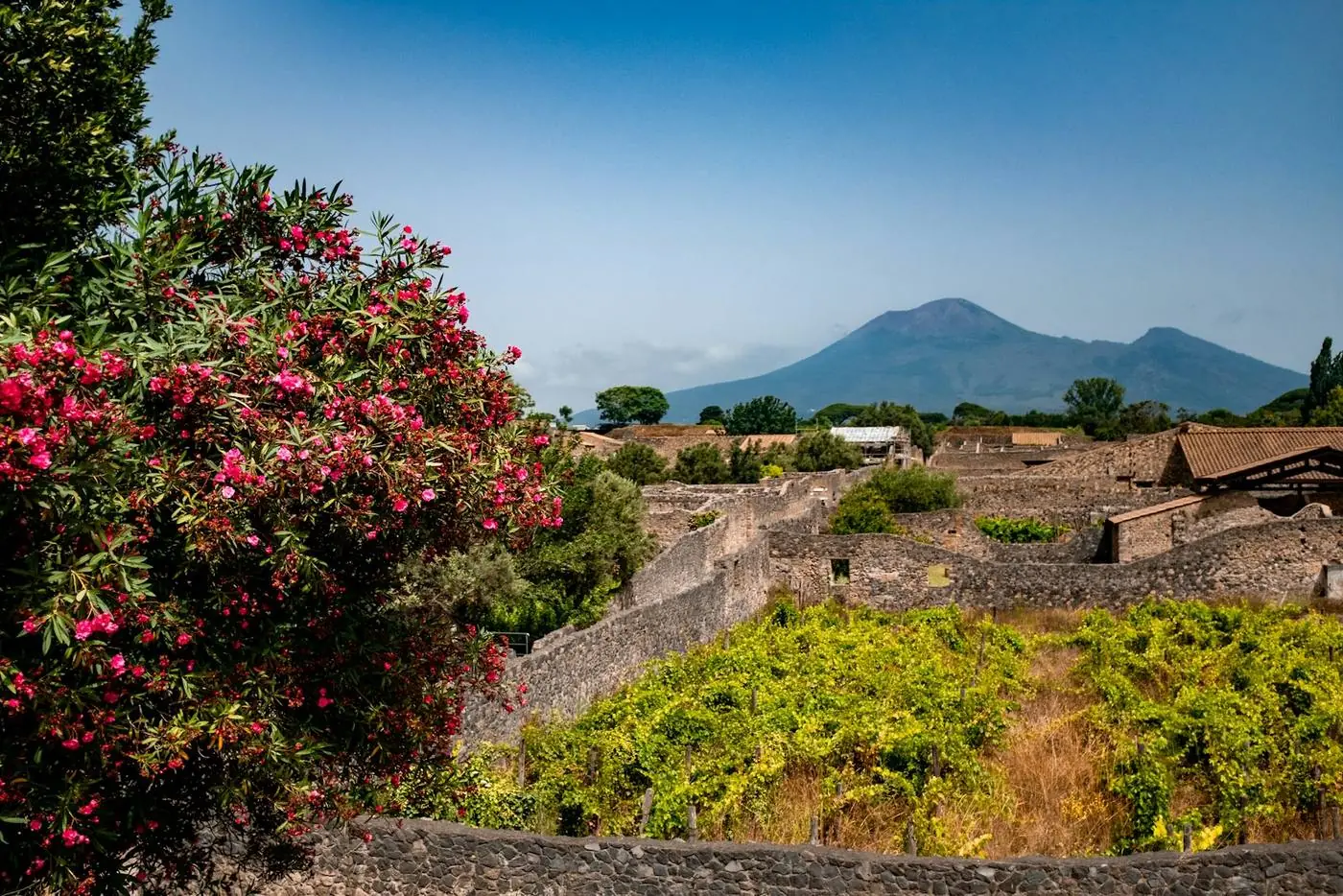
The eruption of AD 79, traditionally dated to 24 August but, according to the most recent studies, probably in autumn, buried it under metres of pumice and ash. Pliny the Younger described it in two letters to Tacitus: his uncle, Pliny the Elder, died trying to bring help.
Seventeen centuries later
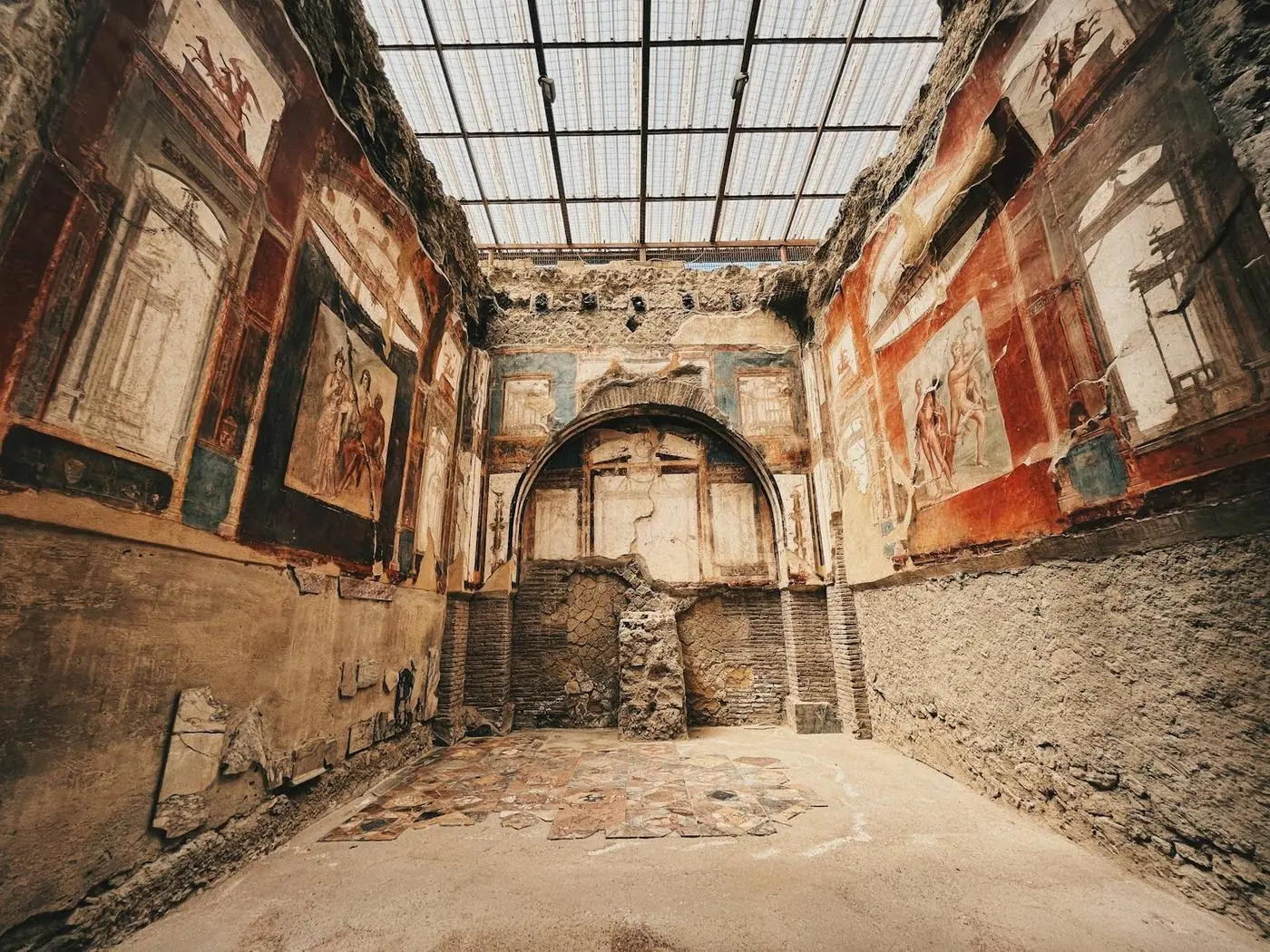
Excavations began in 1748 under Charles of Bourbon. From 1863 the archaeologist Giuseppe Fiorelli poured plaster into the hollows left by bodies in the ash: the casts of the victims were born, still the most powerful image of the city.
Since 1997 Pompeii has been a UNESCO World Heritage Site together with Herculaneum and Oplontis. The park covers about 66 hectares and the excavations have never ended: every year new houses, frescoes and inscriptions come to light.
Not to be missed in Pompeii
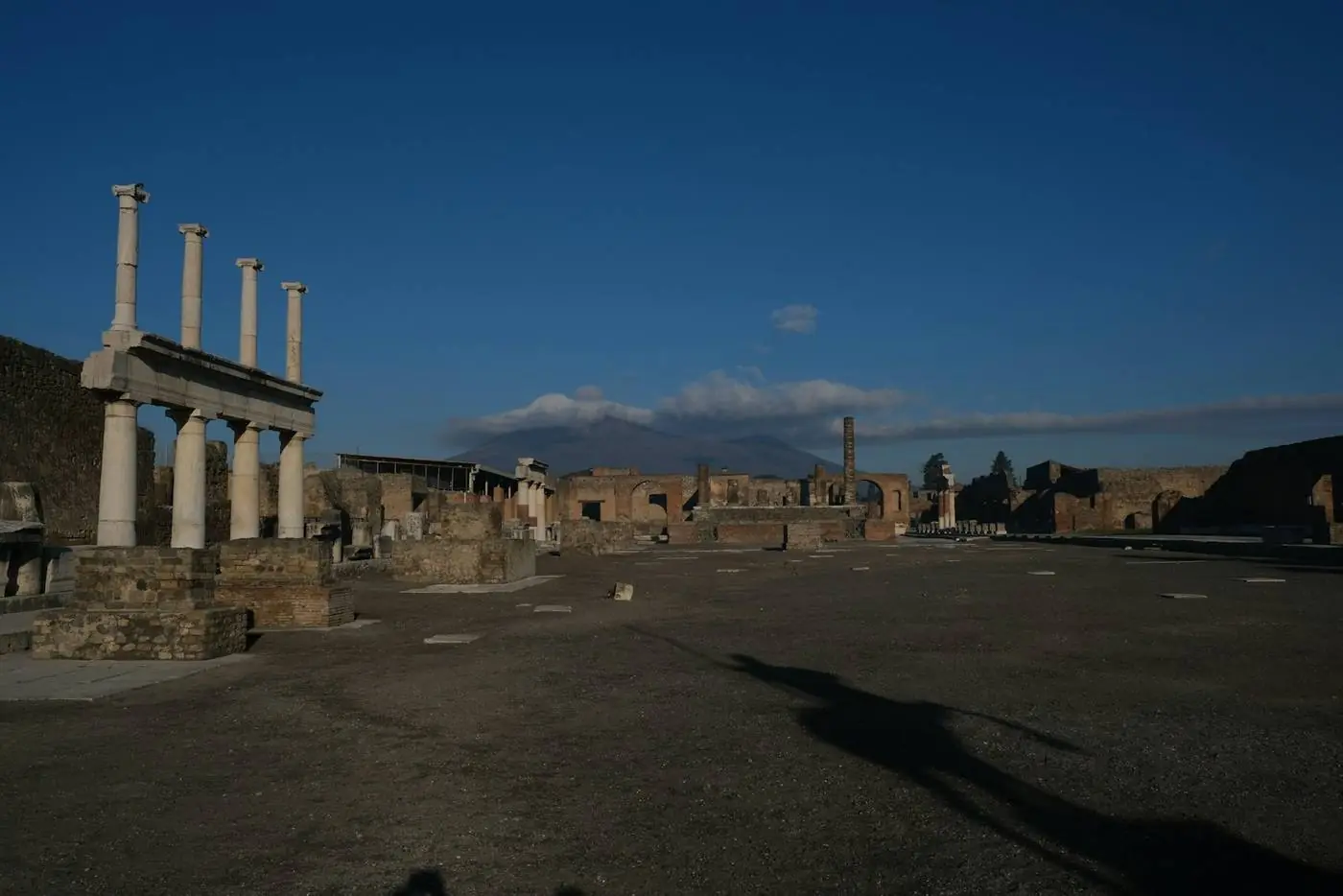
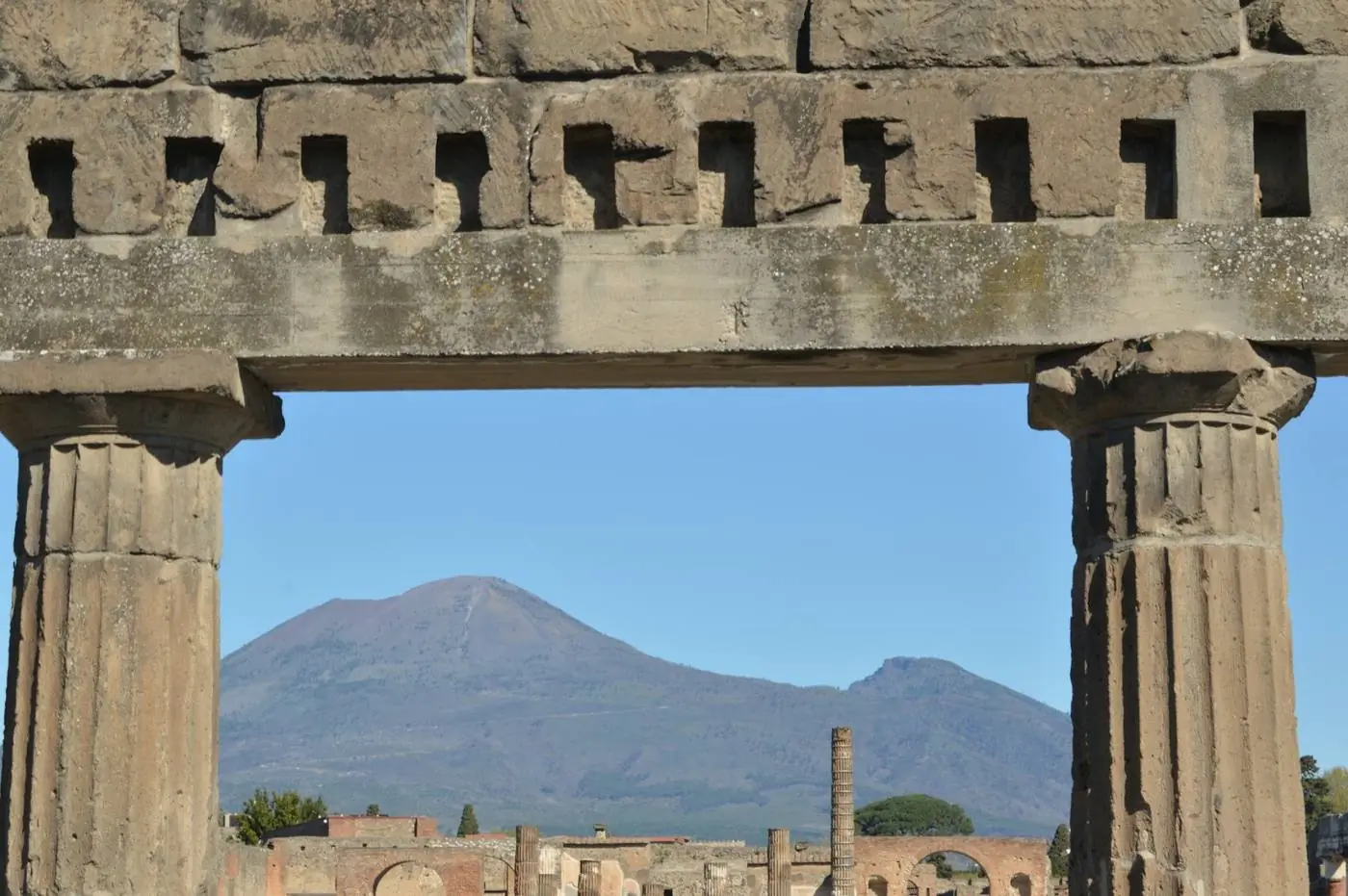
The Forum
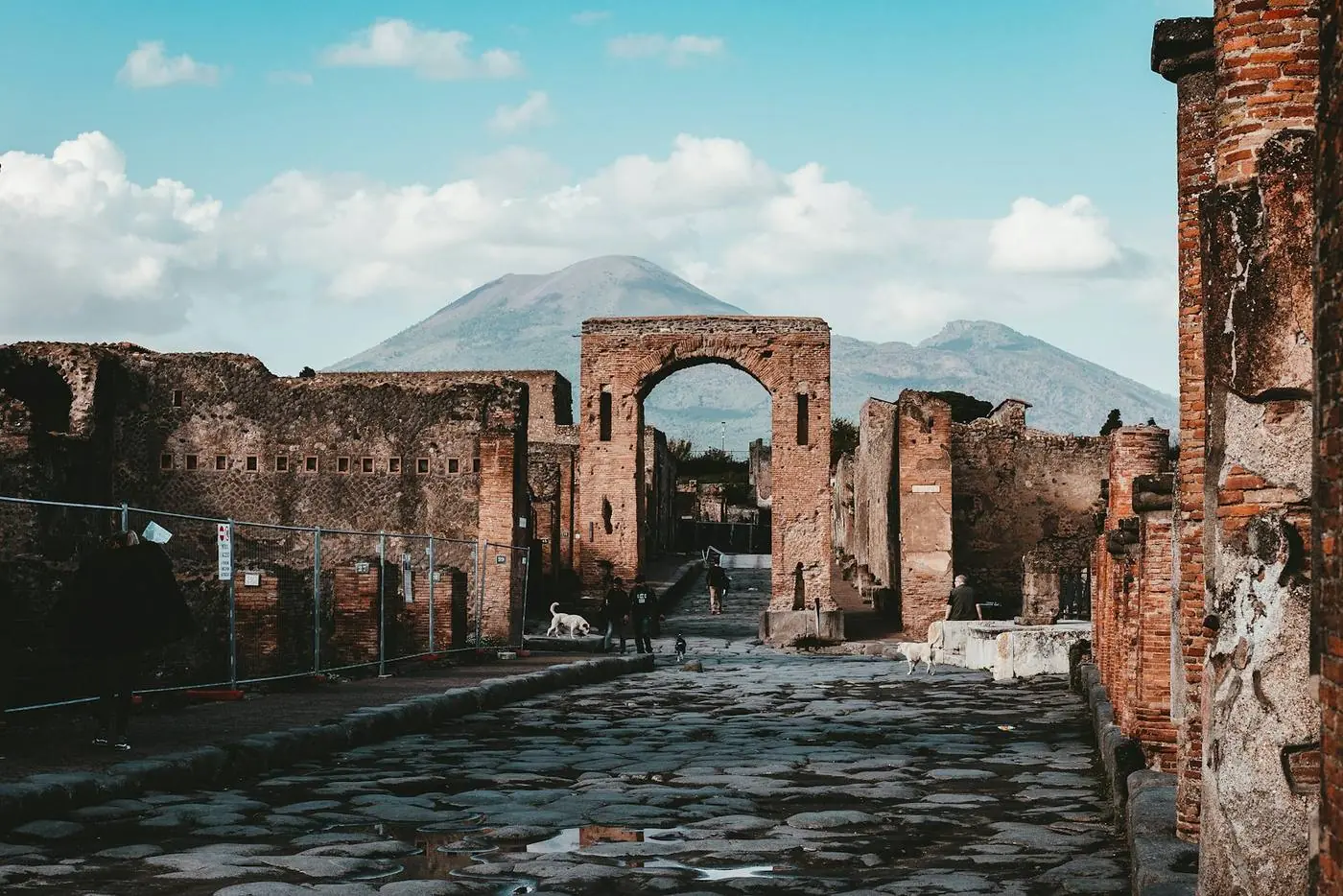
The square of public life, with Vesuvius in the background.
Via dell’Abbondanza
The main street, with shops, signs and cart ruts.
House of the Faun
One of the largest homes, famous for the Alexander Mosaic.
Villa of the Mysteries
The great fresco cycle in its unmistakable red.
Amphitheatre
The oldest surviving Roman stone amphitheatre.
Garden of the Fugitives
The casts of a group of people caught by the eruption.
Before you go
Without traffic, along the Naples–Salerno motorway.
The minimum to see the main areas without rushing.
In summer it’s best to go in early in the morning: there’s little shade.
That’s our day tour.
Comfortable shoes, water and a hat, even in spring: you’ll be walking on Roman paving for hours. Tickets are sold on the official Archaeological Park website; I’ll wait for you at whichever exit you prefer.
Approximate times, without traffic.
Visit Pompeii without worrying about trains, parking and timetables.
Tolls and parking are always included. Carlo checks availability and replies within 24 hours.